CHAMPAIGN, Ill. ― New research from a team of University of Illinois Urbana-Champaign economists estimates the social mobility effects of four-year public historically Black colleges and universities on Black children who live in the same county as an HBCU.
Using data on children born around 1980, the researchers found that HBCUs improved local educational attainment and labor market outcomes for Black children. Specifically, they were 7 percentage points more likely to graduate from college and moved up 2 percentiles in the income rankings relative to Black children from control counties.
It's well documented that there is less upward social mobility for Black people than white people in the U.S., which can partially be chalked up to differences in their surrounding areas and differences in their educational opportunities. Many see HBCUs as a public investment that could help close this gap and improve the social mobility of Black children, said Russell Weinstein, a professor of labor and employment relations and of economics at Illinois.
“We were interested in calculating the impact of historically Black colleges and universities on local social mobility for the children who grew up near them,” Weinstein said.
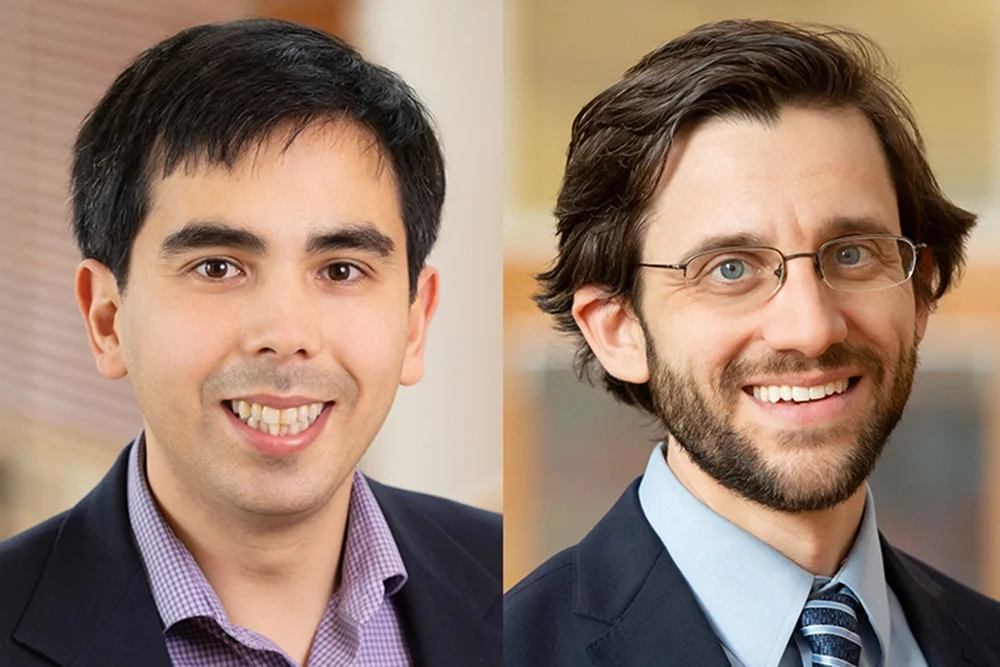
Weinstein's co-authors are Greg Howard, a professor of economics at Illinois, and Namgyoon Oh, an economics graduate student at Illinois.
HBCUs are often touted as one way to improve social and economic mobility of Black students, "but it's a difficult causal question to untangle because universities, including HBCUs, are not located randomly, and they might be located in places where we would expect people to have different levels of social mobility, even without the university there," Weinstein said.
Leveraging an empirical strategy from their previous research, the researchers compared the historical assignment of what were once called "normal schools" ― that is, schools that were established by the state government to educate primary school teachers in the late 19th and early 20th centuries ― to the placement of state-funded mental asylums in order to pinpoint the effects of regional universities on the social mobility of nearby Black children.
After the Civil War, Southern states began opening segregated normal schools to train Black teachers to teach Black students. Around the time states were opening the segregated schools, many also opened segregated mental-health asylums.
"When southern states opened asylums after the Civil War, Black and white patients were often segregated. Some asylums had separate wards for Black patients, or separate buildings on the same property as the buildings for white patients," Weinstein said.
The site selection criteria for a normal school or a mental asylum were quite similar, with state legislatures either directly choosing locations or setting up commissions to determine the locations. The researchers focused on the asylums opened only for Black patients, "as we think the counties receiving these institutions are plausibly most similar to those receiving a normal school for Black students," Weinstein noted.
At the time, both institutions were viewed favorably by the local community.
"In our previous work, and also in this one, we show by looking at old newspapers as well as legislative histories, where we can look at the votes and the debates surrounding the establishment of these institutions, that the local communities seemed to have desired those institutions in their counties," Weinstein said
Most normal schools eventually evolved into regional universities, while most state-funded mental asylums were converted into psychiatric hospitals or other rehabilitative facilities.
"To really identify the impact of an HBCU, we needed to have some strategy for identifying that causal impact," Weinstein said. "And that, for us, was going to involve a control group of counties that we thought were a good counterfactual for what the counties that got the HBCUs would have looked like if they had received a different state institution instead."
The researchers found that Black children from counties with a normal school to train Black teachers were 7 percentage points more likely to graduate from college and move up 2 percentiles in the income rankings relative to Black children from control counties with state-funded mental asylums.
"The results were very similar when comparing to counties with asylums for Black individuals, or comparing to all same-state asylum counties," Weinstein said. "The effects are large because the mean of the likelihood of getting a four-year college degree in the asylum counties for Black children is about 20%, and we're finding a 7-percentage point increase in that, so that's a really large percentage increase in the fraction getting a college degree."
The researchers did not find these effects for white children, according to the paper.
"One thing that I think is interesting about this setting is we're comparing Black children in counties that got the normal schools to train Black teachers, and we're comparing them to Black children in asylum counties," Weinstein said. "And interestingly, the Black children in asylum counties had close proximity to a similar number of four-year colleges and universities. It's just that they didn't have proximity to an HBCU."
The researchers also found effects on labor market outcomes.
"Black children who grew up in counties that received a normal school to train Black teachers were about two percentiles higher in the national income distribution as adults, which translates to about an 8% increase in annual income," Weinstein said. "That's definitely a nontrivial effect on income as well, and we also see that they are less likely to be incarcerated."
One of the benefits of HBCUs is that they play a role in their local communities, specifically for Black children and their economic mobility, the scholars said.
"This research helps to quantify that, which we think should be an important finding for policymakers, especially considering that about half of HBCUs are public universities that are highly dependent on state legislatures for their funding," Weinstein said.
A working paper of this research was released through the IZA Discussion Paper Series from the IZA Network @ LISER (Luxembourg Institute for Socio-Economic Research).
Editor's note:
To contact Russell Weinstein, call 217-300-6410; email weinst@illinois.edu.
The paper "The effect of HBCUs on local social mobility" is available online.