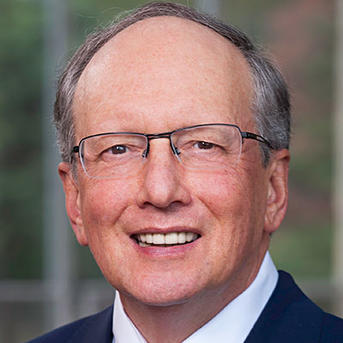
Professor Morris M. Kleiner and Sally M. Kleiner created the “Morris and Sally Kleiner Labor Economics Prize” to reward Ph.D. students for their outstanding scholarship in labor economics at the University of Illinois at Urbana-Champaign. This award was first given in 2018.
Professor Morris Kleiner earned his PH.D. from the Department of Economics at the University of Illinois at Urbana-Champaign in 1974. On August 29, 2016, he gave a seminar to economics students at the University of Illinois on his paper, “Analyzing the Influence of Occupational Licensing Duration on Labor Market Outcomes”. He has also written or been co-author of nine books, the most recent in 2022 is Grease or Grit: International Case Studies of Occupational Licensing and Its Effects on Efficiency and Quality with Maria Koumenta.
While working at the Brookings Institution and the U.S. Department of Labor in 1976 and 1977, Professor Kleiner started researching occupational licensing. Since that time Kleiner’s research has been funded by numerous nonprofit foundations, the U.S. federal government, and international organizations to develop new data on occupational licensing statutes and regulations over time and across nations. The results of the research have been published in top- tier professional and academic journals. Policy-oriented research has been covered in the New York Times, Wall Street Journal, Washington Post and many other highly visible outlets. In addition, he has been a guest on many top podcasts and radio and television interview programs. Further, he has been invited to and given in person testimony to both U.S. Senate and House Committees on occupational regulation policy based on the research. In addition, the work has influenced federal executive branch policy on occupational regulation as well as state policies on occupational licensing. Kleiner has provided briefs to the U.S. Supreme Court on occupational licensing issues. Internationally, he has served as an adviser to the World Health Organization (WHO), European Union (EU), World Bank, and the Organization for Economic Cooperation and Development (OECD).
Professor Kleiner was selected as one of the Michael A. and Anita Paleologos Yagjian Visiting Fellows at Stanford University’s Hoover Institution. In addition, he maintains his work as a Visiting Scholar in economics at the Federal Reserve Bank of Minneapolis. In 2018 he was selected as a recipient of the Lifetime Achievement Award from the Labor and Employment Relations Association for outstanding contributions to the field of Industrial Relations and Human Resources.
Currently, he is on the faculty of the University of Minnesota where he is a professor and the inaugural AFL-CIO Chair in Labor Policy at the Humphrey School of Public Affairs. Further, he holds a position as a research associate with the National Bureau of Economic Research in Cambridge, Massachusetts and serves as a Labor Policy Fellow at the Archbridge Institute. He is also a visiting scholar for the Economic Research Department at the Federal Reserve Bank of Minneapolis, Professor Kleiner is a widely renowned and respected scholar.
Recipients
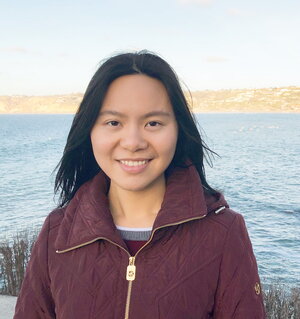
Sunny Liu - 2025
Sunny's project studies how parental employment shocks during one’s childhood affects the type of human capital investments and labor market decisions one makes during adulthood. We merge the American Community Survey, 1040 IRS data, 2000 Decennial Census, and the LEHD. This project mainly evaluates intergenerational impact of negative employment shocks from parents on children’s postsecondary academic and career outcomes. The project also explores how a shock to gender composition of household income affects transmission of gender attitudes for daughters. Existing studies show mixed evidence of impacts of parental job loss on children’s college enrollment and early career. However, while most studies focus on the extensive margin on whether the child attends college or other forms of post secondary schooling, we dive deeper into the type of human capital investment the child makes, conditional on attending college.
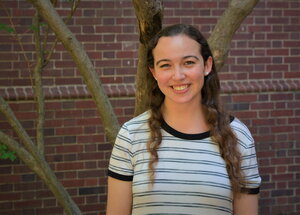
Shivangi Ambardar - 2024
My research explores the early union movements in the 19th century UK railway industry, focusing on their emergence, spread, and impact. Specifically, I examine whether workplace accidents predicted union growth, how unionization shaped worker outcomes, and the mechanisms through which union sentiment spread across railway networks. This topic remains highly relevant today, as modern labor movements reflect the continuing importance of collective action in addressing workplace challenges, advocating for fair treatment, and improving labor conditions. To address these questions, I use optical character recognition (OCR), text analysis, and web scraping tools to digitize handwritten union membership logs and accident records. By converting historical records into structured data, I can analyze the relationship between accident rates and union growth across regions and time periods. Although analysis is ongoing, this research contributes to our understanding of labor economics, economic history, and network dynamics, providing historical insights into the transformative role of unions in industrial labor practices and broader labor market dynamics.
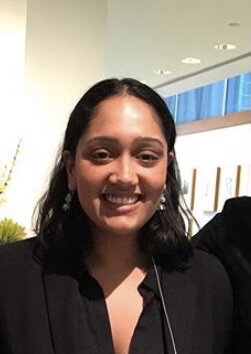
Callan Whamond - 2024
Callan’s doctoral work is focused on Labor Economics and Urban Economics, specifically housing affordability and access to homeownership. Her current research explores the relationship between rising household incomes and housing consumption in the U.S. over time. In this work, she leverages the revolution in women’s labor as a shock to household income.
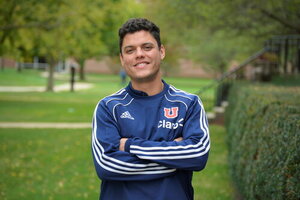
Cristhian Molina Gonzalez - 2023
The key question that Chistian Molina addresses in his research is how information about the quality of an institution of higher education affects students’ colleges choices, and to what extent a student’ choice where to enroll impacts that student’s future labor market outcomes. Christian uses a unique data set on college admission in Chile and connects it with another data set from the Chilean Ministry of Labor. This allows him to evaluate the social benefits of providing better information to students about different colleges and, in the case of Chile, the impact of stricter accreditation standards.
Eduardo Medina-Cortina - 2022
Eduardo is a PhD candidate in Economics and a MSc student in applied statistics. His primary research fields are labor and migration economics. His current research focuses on improving measurements of the flows and stocks of the undocumented population in the United States, as well as the effect of US-based policies on current and future undocumented migration patterns.
Maria Noelia Romero - 2021
Noelia’s current research focuses on how immigration affects the schools’ resources, the native’s academic performance, and the parents’ school choice. In particular, her research studies the recent Venezuelan immigration in Peru where the school market is similar to a free market for education because of its regulations. In previous research, Noelia studied the effect of the Venezuelan shock characterized by relatively high-skilled labor in Peru’s local labor market.
Jian Zou - 2021
Jian’s current research investigates how students’ human capital accumulation is affected by their peers’ characteristics. In particular, one of Jian’s working papers is focused on the impacts of peers’ personality traits on students’ academic and noncognitive outcomes. Another project is on understanding the spillover of peers’ parental education. In the proposal awarded the prize, Jian has evaluated the impacts of a recent, nationwide, and high-stakes teacher licensing policy on teacher labor supply and student achievement in the US.
Juan Munoz Morales - 2019
Juan’s current research investigates how trade liberalization affects women and men differently in the labor market. In his previous research, published in the Journal of Development Economics, Juan shows that the perceived “Math gender gap” in Columbia can be largely explained by sample bias: Low performing male students tend to drop out of school, while lower performing female students remain, thus lowering the average test scores of female student.
Andrea Atencio-De-Leon - 2019
Andrea’s current research investigates the impact of outsourcing on the labor market. Specifically, her research links outsourcing to a decrease of hiring, firing, and worker reallocation in the U.S. labor market. In previous research, Andrea has investigated the gender wage gap using data from Armenia and Colombia.
Yuci Chen - 2018
Yuci Chen’s current research focuses on investigating firm’s response to exogenous wage changes, in particular, she is interested in understanding to what extent do firms substitute between capital and labor.