Please tell us a little bit about yourself (such as where you are from, hobbies, family, etc.….whatever you would like to share.)
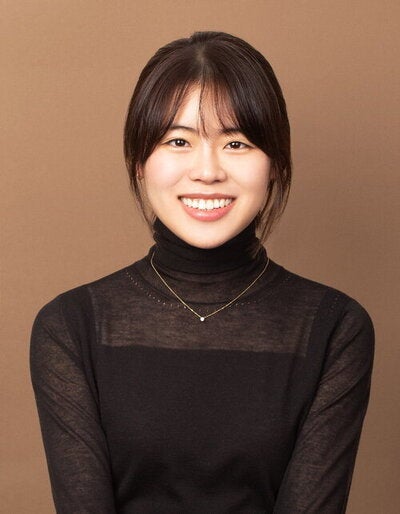
Hello everyone! I'm Hoyoung. I am originally from Seoul, South Korea, and later made my way to the University of Wisconsin-Madison, where I earned my PhD in economics and survived the winters, the beers, and the sailing.
Why did you decide to major in or pursue graduate studies in economics?
I first chose to major in mathematics during my undergraduate because of its clarity and logic. I then added a double major in economics to connect with real-world problems. After graduating, I worked at the Bank of Korea as a junior economist but ultimately decided to invest in my human capital while I am young by pursuing graduate studies.
Briefly, what are you primary teaching and research interests?
My research lies at the intersection of labor, urban, and public economics. I study both the intended and unintended consequences of labor/regional policies, motivated by interesting data patterns or policy interventions. For instance, I investigate multiple aspects of remote worker relocation programs, which provide cash incentives for remote workers to relocate to specific cities. Can local governments achieve their goals? Who are the winners and losers? What are the implications for the national economy? Methodologically, I employ a wide range of datasets, reduced-form analysis and structural models, and recently, a randomized controlled trial. I teach labor economics at all levels — from undergraduate to graduate.
What is your favorite part of being an economist or teaching economics?
I value the economist's way of thinking: the pursuit of efficiency under given objectives and constraints. I also enjoy the interplay between economic models and data evidence--using models to predict the outcomes and then testing and refining those through data. For me, teaching provides the opportunity to share these perspectives with students and help them appreciate economic thinking.
What is your best advice to students studying economics?
Build intuition first, see the forest before the trees, and practice zooming in and out between big questions and details.